Community Advice Officers
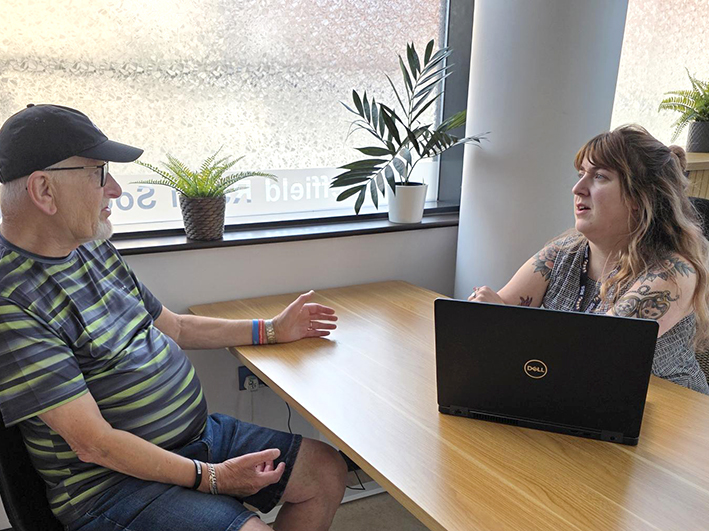
SRSB/RSS has a team of Community Advice Officers (CAOs) who offer a comprehensive support service for our clients. Their main responsibility is to visit visually impaired people in their own home. They provide a full needs assessment for newly registered blind or partially sighted people, whilst offering support to existing clients who require assistance with a variety of issues, including changes in circumstances or changes in their sight loss.
Here's an overview of what someone can expect from an initial home visit or conversation with our CAO Team:
Our CAO will take time to understand our client's individual circumstances, what support is already in place and what matters most to you. The conversation is friendly and informal, whether our client lives at home, in residential care or is supported by family, carers or other professionals.
During the visit, our CAO can discuss practical ways to support independence and confidence. This may include useful equipment such as UV shields, symbol canes, talking books, adapted phones, writing guides or tactile markers, as well as looking at possible safety or access issues around the home.
They can also provide information about finances and benefits, help with appropriate forms and signpost to specialist advice where needed.
With our client's permission, family members, carers, supporters or other professionals are welcome to be involved.
The visit will always be adapted to our client's needs and circumstances. If you are tired, unwell or only able to speak briefly, that is completely fine. Following the visit, any agreed actions, equipment provided, information shared or next steps will be summarised. With appropriate consent, relevant family members, care providers or organisations can also be kept updated.
Our support does not end after the initial visit. The person, their family, supporters, care team or another organisation can contact SRSB/RSS again if circumstances change or further advice is needed. Privacy and consent remain central throughout: information-sharing will be explained and appropriate consent sought, and the person needing support remains in control of the support they choose to accept wherever possible.
Our team are also a vital link to refer our clients to other appropriate services, for example, SRSB/RSS’s own services and support, including practical help, emotional wellbeing, social activities and referrals to specialist organisations where appropriate.